

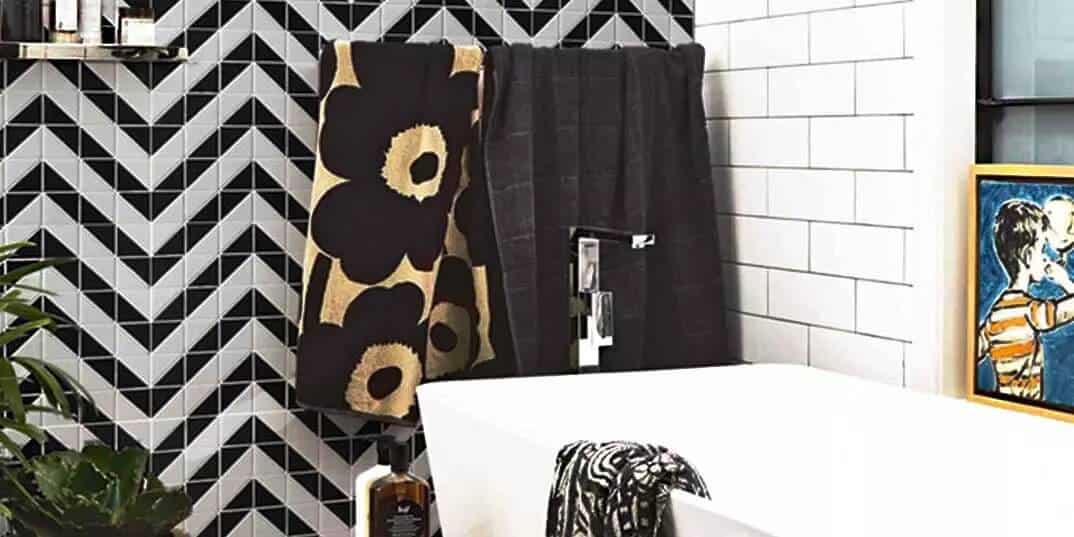
The right tile can make a 4 m² bathroom feel twice the size. The wrong one makes it feel like a cupboard. This guide covers the ten tile choices that genuinely open up small bathrooms – with practical advice on size, format, and finish.
Why Tile Choice Affects How Big a Bathroom Feels
Large-format, light-coloured, and reflective tiles consistently make small bathrooms appear more spacious than standard-sized alternatives.
Grout lines are the key variable. Fewer lines mean less visual noise, and less visual noise means the eye travels further before stopping. Reflective finishes bounce light across surfaces, adding perceived depth.
Colour temperature matters too. Cool whites and soft greys recede; dark statement tiles close in. Choose wisely and the room does the spatial heavy lifting for you.
The 10 Best Tiles for Small Bathrooms
1. Large-Format Porcelain (600 mm × 600 mm or Above)
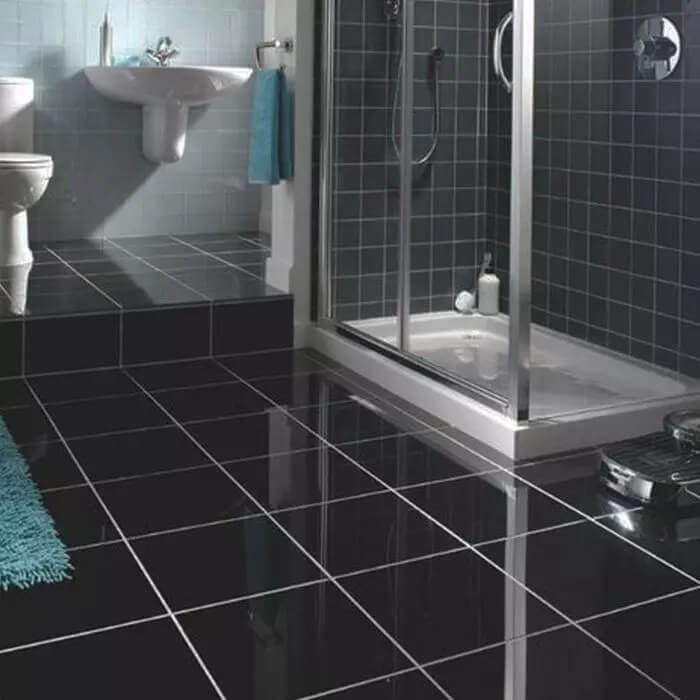
Large porcelain tiles reduce grout lines dramatically, creating an unbroken floor or wall surface that visually expands the room.
Fewer joints mean less interruption for the eye. A 600 mm × 600 mm tile produces roughly a quarter of the grout lines of a standard 300 mm tile across the same area.
- Best in: white, off-white, or pale greige tones
- Finish: matt or satin for walls; anti-slip matt for floors
- Watch out for: subfloor levelness – large formats expose any unevenness
2. Gloss White Ceramic Wall Tiles
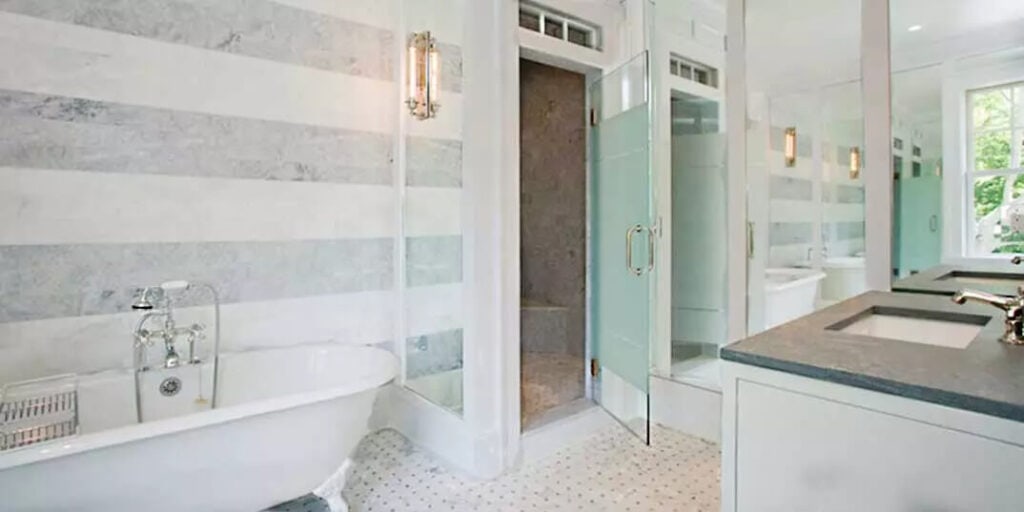
Gloss white ceramic tiles reflect natural and artificial light, making walls appear further away than they physically are.
The reflective surface doubles perceived brightness without adding a single fitting. They are also among the most affordable tiles on the UK market.
- Best size: 300 mm × 600 mm in a brick bond layout
- Pairs well with: a dark grout for definition, or white grout for total continuity
- Avoid: overusing on floors – glossy floors feel slippery and cold
3. Subway Tiles Laid Vertically
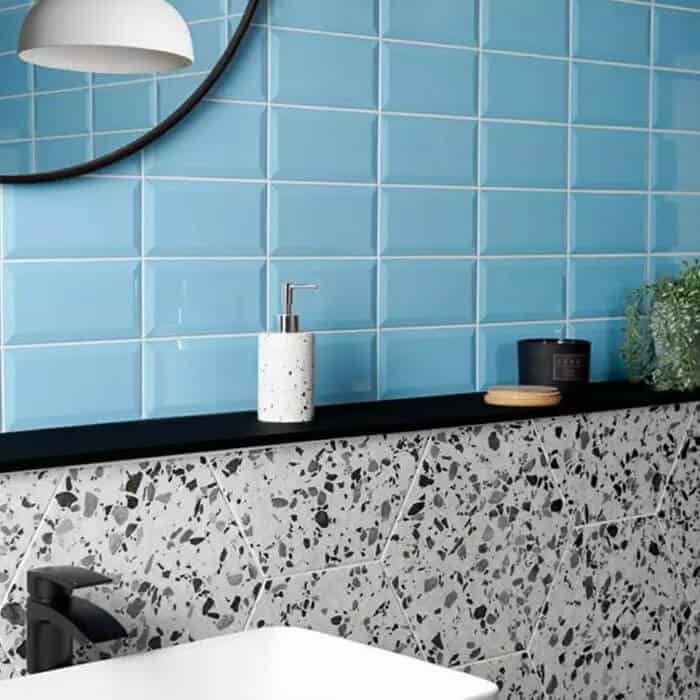
Vertical subway tiles draw the eye upward, making low-ceilinged small bathrooms feel taller and more open.
Standard subway tiles (75 mm × 150 mm or 100 mm × 300 mm) are a familiar format. Simply rotating the layout orientation changes the entire spatial impression.
- Ceiling-height installation amplifies the effect
- White or pale stone finishes work best
- Pair with floor-to-ceiling fitting for maximum height perception
4. Rectified Porcelain with Thin-Joint Grouting
Rectified tiles with 1–2 mm grout joints create near-seamless surfaces that trick the eye into reading a wall as one continuous plane.
Rectified tiles are machine-cut to precise dimensions. This allows near-invisible jointing when installed by a skilled tiler.
- Minimum grout width: 1.5 mm (check tile manufacturer guidance)
- Best colours: light stone, concrete grey, or bone white
- Installation note: requires a perfectly flat substrate
5. Marble-Effect Porcelain
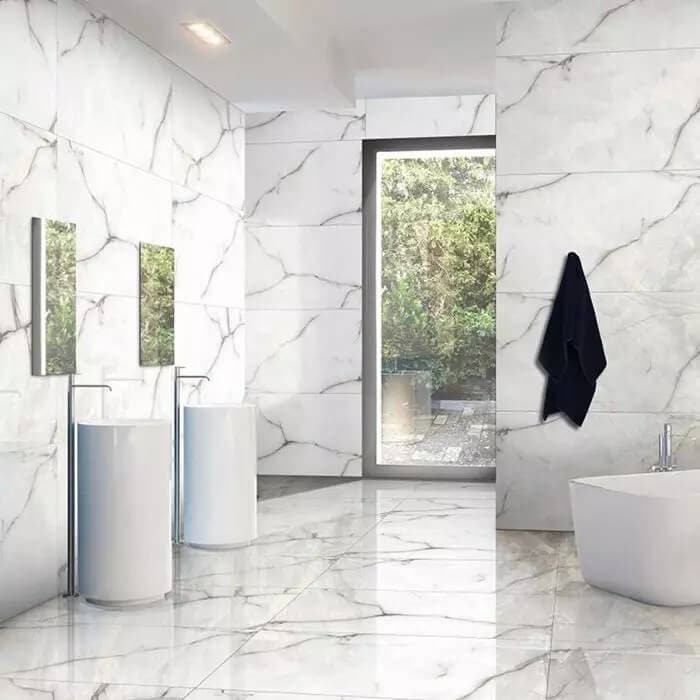
Marble-effect porcelain adds visual depth and a sense of luxury without the maintenance demands of real stone in a wet bathroom environment.
The natural veining in marble-effect tiles draws the eye across the surface rather than stopping at a single point. This creates depth on flat walls.
- Large slab formats (1200 mm × 600 mm) work especially well
- Use the same tile on floors and walls for a continuous “wet room” effect
- Choose a book-matched pair for a feature wall behind the basin
6. Glass Mosaic Tiles
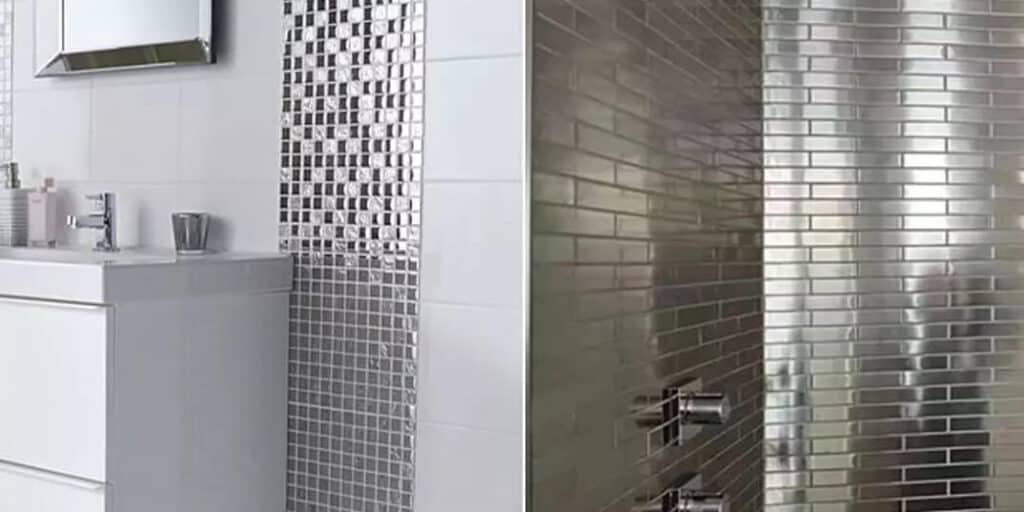
Glass mosaics reflect light from multiple angles simultaneously, making even north-facing bathrooms feel brighter and more open.
The reflective quality of glass goes beyond standard glazed ceramic. Light scatters across the surface at different intensities depending on viewing angle.
- Best used as: a full shower enclosure or single feature wall
- Pair with: plain large-format tiles elsewhere to avoid visual overload
- Grout choice: unsanded, colour-matched to the tile body
7. Micro-Cement Look Porcelain
Micro-cement effect tiles carry a consistent, texture-free surface across large formats, removing the visual clutter of pattern and grout variation.
The soft, muted tones of micro-cement finishes absorb rather than reflect light — creating calm rather than sparkle. In small bathrooms, calm reads as spacious.
- Best sizes: 600 mm × 1200 mm for walls, 600 mm × 600 mm for floors
- Colour palette: warm grey, sand, taupe
- Finish: matt – satin versions can look plasticky in smaller rooms
8. Hexagonal Floor Tiles in Light Tones
Light hex tiles on the floor add geometric interest without the weight of dark patterns, keeping the room feeling airy and open.
Hexagons create movement without strong directional lines. The eye circulates rather than stopping at borders. This suits awkward or irregular bathroom footprints.
- Recommended size: 51 mm or 100 mm hex in white or pale stone
- Use fine white or pale grey grout to maintain continuity
- Extend hex tiles into the shower tray for a unified floor plane
9. Plank-Format Tiles Laid Lengthways
Rectangular plank tiles (150 mm × 600 mm or longer) laid along the longest wall line pull the eye down the room, increasing perceived length.
The same principle as using floorboards to make a room feel longer. Orientation and proportion do the spatial work, not just colour.
- Best finish: wood-effect or concrete-look porcelain planks
- Avoid diagonal laying in small bathrooms – it fragments the visual field
- Use a 1/3 offset rather than a 50% brick bond to reduce repetition
10. Continuous Floor-to-Wall Tile in One Colour
Using the same tile on both floor and walls removes the horizontal boundary line that visually splits and shrinks the room.
The skirting line is where most bathrooms “stop.” Eliminate it and the room reads as one unbroken volume. This is the most impactful spatial trick available with tile alone.
- Works best with: large-format porcelain or micro-cement effect tiles
- Grout: match the grout colour to the tile as closely as possible
- Practical note: use slip-rated tiles on floors even in matt finishes
Key Design Rules to Apply Across All 10 Options
Following three core principles maximises the space-creating effect regardless of which tile you choose.
- Keep grout lines minimal — thin joints, matched grout colour
- Extend tiles to ceiling height — stopping at door height creates a visual cap
- Limit tile types to two — one for walls, one for floors; mixing more adds visual clutter
Summary
The tiles that create space in small bathrooms share three qualities: large format, minimal grout lines, and light or reflective surfaces. Porcelain, rectified tiles, and glass mosaics consistently outperform smaller patterned options. Pair any of the ten choices above with ceiling-height installation and a matched grout colour, and the room will work harder than its square footage suggests.