

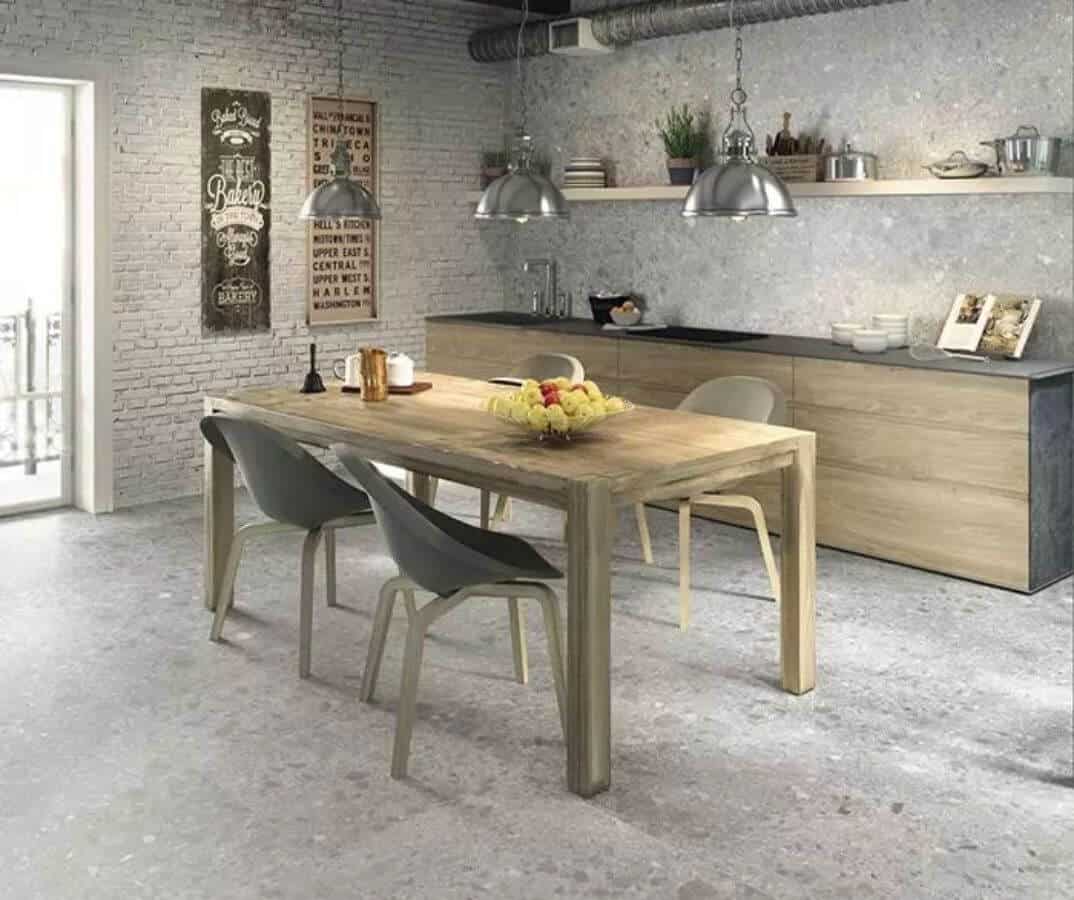
After a long stretch of safe, neutral schemes and predictable white gloss cabinetry, homeowners are making bolder choices. Whether you’re planning a full kitchen renovation or simply replacing a tired splashback, the range of kitchen tiles available in 2026 gives you more to work with than ever before.
This guide covers the tile styles, materials, and finishes, with practical advice rooted in UK homes and real-world kitchens.
Best Kitchen Tile Trends, Materials and Styles for UK Homes in 2026
1. Zellige Tiles: Texture With Genuine Character
Zellige has moved from boutique hotels and high-end restaurant fitouts into everyday British homes, and the appeal is not hard to understand. These hand-crafted Moroccan clay tiles have a naturally uneven surface that catches and shifts light throughout the day. No two tiles are identical, which gives a finished wall a warmth and depth that machine-made tiles simply cannot replicate.
The most popular application in UK kitchens right now is as a splashback or a feature wall behind open shelving, typically paired with deep cabinet colours: bottle green, warm navy, or soft charcoal. Zellige also works well in cream, terracotta, and dusty rose tones for those who want warmth without going too dark.
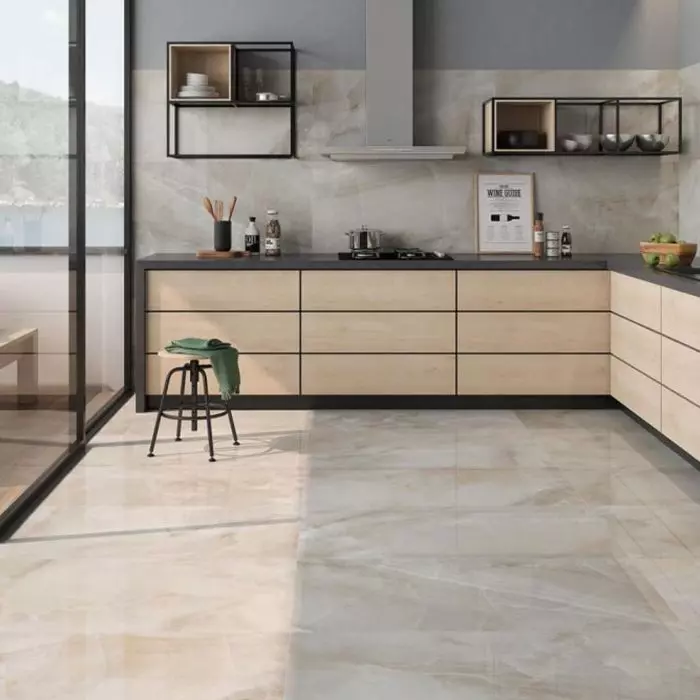
2. Large-Format Porcelain Kitchen Tiles: Clean Lines, Low Maintenance
Large-format porcelain remains one of the most practical and popular choices for UK kitchen floors in 2026, and for good reason. Tiles in 60x120cm or 120x120cm formats mean fewer grout lines, which translates directly to easier cleaning and a more open, flowing visual.
Modern porcelain has also become genuinely impressive in how it mimics natural materials. Stone-effect, concrete-effect, and linen-effect porcelain tiles are now almost indistinguishable from the real thing at a glance, but offer far better performance. Porcelain is non-porous, scratch-resistant, frost-resistant, and built to handle the daily reality of a busy family kitchen.
For smaller British kitchens, which are often galley-style or single-run layouts under 10 square metres, larger tiles do the visual work of making the room feel more generous. Pair with a lighter grout to keep the effect airy.
Best for: Contemporary and minimalist kitchens, open-plan kitchen-diners, high-traffic households with children or pets.

3. Terracotta and Encaustic Cement Tiles: Warmth That Lasts
The raw-materials aesthetic that has shaped UK interiors broadly across the mid-2020s has given terracotta a proper revival. Warm-toned, matte, and pleasingly imperfect, terracotta floor tiles bring references that feel considered and grown-up rather than themed. They pair particularly well with limewash-painted walls, warm timber joinery, and unlacquered brass hardware.
Encaustic cement tiles follow a similar logic, offering geometric or botanical patterns built into the tile body itself rather than printed onto a surface layer. They work on floors and as splashback features, though they do require sealing and regular maintenance. Anyone wanting a fully low-maintenance kitchen should take note before committing.
Best for: Farmhouse kitchens, rural cottages, homes with a warmer, earthier interior direction.
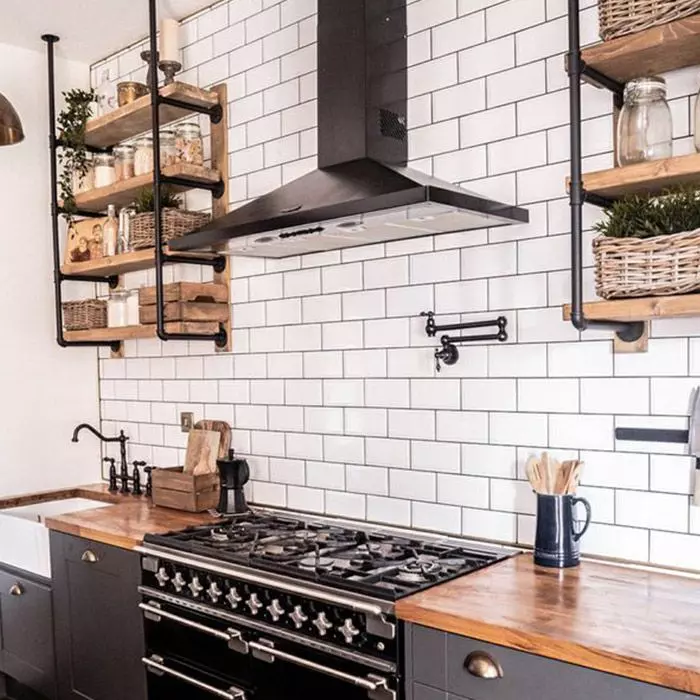
4. Slim Brick and Metro Format Tiles: Versatile and Consistently Strong
Brick-format kitchen wall tiles have been a British staple for well over a decade, and they are not going away. What has shifted is the finish and the colour palette. Classic glossy white subway tiles feel dated in 2026; the energy has moved firmly towards matte glazes, crackle finishes, fluted profiles, and colours like aged cream, dusty sage, warm stone, and pale terracotta.
Laid in a herringbone pattern, a vertical stack, or a classic brick bond, these tiles remain one of the most affordable and adaptable wall tile options available. Prices can start from as little as £25 per square metre, making them accessible whether you are renovating on a tight budget or simply want a reliable backdrop that won’t clash with future updates.
Best for: Victorian and Edwardian terraces, modern new-builds, kitchens that need reliable versatility.
How to Choose Kitchen Floor and Wall Tiles That Work for Your Home
Picking the Right Kitchen Tiles Based on Light, Space, and Layout
The single biggest mistake homeowners make is choosing tiles under flattering showroom lighting without considering the actual conditions of their kitchen. Here is a straightforward way to think about it:
North-facing kitchens sit in cool, grey-toned light for most of the day. Pale cool-whites and blue-greys will feel flat and clinical. Warmer tones, aged creams, terracottas, or textured zellige will do far more for the room.
Small kitchens gain visually from larger tiles, lighter colours, and fewer grout breaks. A 60x60cm porcelain tile in a warm neutral makes a narrow galley kitchen feel noticeably more spacious than a grid of small wall tiles used on the floor.
Open-plan kitchen-diners need floor tiles that can carry across a large, multi-function space without creating visual noise. Subtly textured stone-effect porcelain or large-format concrete-look tiles are reliable choices. Avoid heavily patterned floors when the same surface runs into a dining or living area.
Splashbacks are where you can afford to take a creative risk. Because they sit behind a worktop or hob rather than underfoot, bold colour and strong pattern feel intentional rather than overwhelming. This is the right place to use a premium tile if budget is a factor elsewhere.
What to Budget for Kitchen Tiles in the UK in 2026
Tile costs vary widely depending on material and supplier. As a working guide:
- Budget tier (£15 to £40/m²): Standard ceramic wall tiles and basic porcelain floor tiles. Functional and widely stocked at high-street retailers.
- Mid-range (£40 to £100/m²): Quality porcelain, encaustic cement tiles, and better brick formats from specialist tile suppliers.
- Premium (£100 to £250+/m²): Zellige, hand-made terracotta, bespoke encaustic designs. Reserve for focal surfaces where the detail genuinely earns its place.
Always factor in adhesive, grout, and fitting costs. Professional tiling labour in the UK typically runs between £30 and £60 per square metre, depending on tile size, pattern complexity, and your location.
The best kitchen tile for your home is not the one getting the most attention on social media right now. It’s the one that suits your light, your layout, your household, and the way you actually use the room. Order samples, place them on the wall, and live with them for a few days in your own kitchen before committing. Your eyes won’t lie.