

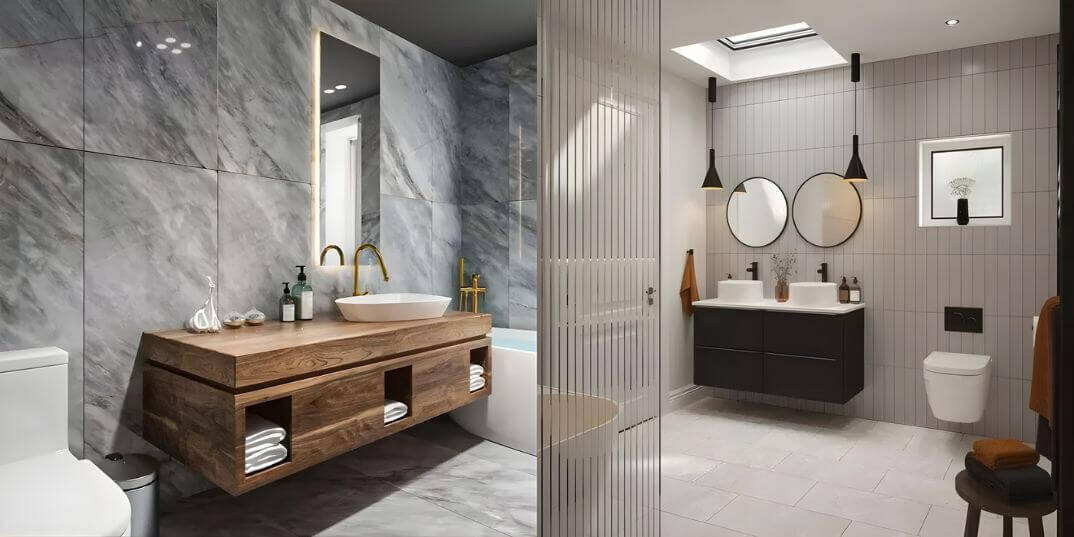
Walk into any tile supplier and you’ll hear it repeated like gospel: “large tiles make a small bathroom feel bigger.” It’s advice that circulates across interior design blogs, renovation forums, and trade counters alike. But is it always true? And what are you actually giving up when you go large in a compact space?
The reality is more nuanced — and understanding it properly will save you from a costly specification mistake.
Why Bathroom Tile Sizes Matter More Than Most People Expect
Tile size directly influences how your eye moves around a room. Every grout line is a visual interruption — a boundary the brain registers, consciously or not. A bathroom tiled in 100×100mm mosaic creates dozens of those interruptions per square metre. A bathroom tiled in 1200×600mm porcelain slabs might have just two or three lines crossing an entire wall.
That reduction in visual noise is what creates the perception of space — and it’s why bathroom tile sizes are one of the first decisions a designer makes, ahead of colour, material, or finish.
But perception and reality are two different things, and tile size affects more than just how big a room looks.
The Case for Large Format Tiles
Large format tiles — typically anything from 600×600mm upward, with 600×1200mm and 800×800mm being the most popular bathroom choices in the UK right now — genuinely do make a room feel more open when used correctly.
Here’s why they work:
Fewer grout lines reduce visual clutter. A 600×1200mm tile laid portrait on a wall creates a strong vertical rhythm with minimal horizontal interruption. The wall reads as one surface rather than a grid. In bathrooms with low ceilings (common in UK new-builds and converted flats at 2.2–2.4m), this vertical movement makes the ceiling feel higher.
Full-body consistency looks more expensive. Large format porcelain tiles — particularly those mimicking marble or limestone — display their veining or pattern continuously across the surface. The joins become almost incidental.
Cleaning is faster. Fewer grout joints mean less surface area for soap scum, limescale, and mould to gather. For busy family bathrooms, this is a genuinely practical benefit.
Where Large Tiles Create Problems
Large format tiles are not a universal solution. In several common UK bathroom scenarios, they actively work against you.
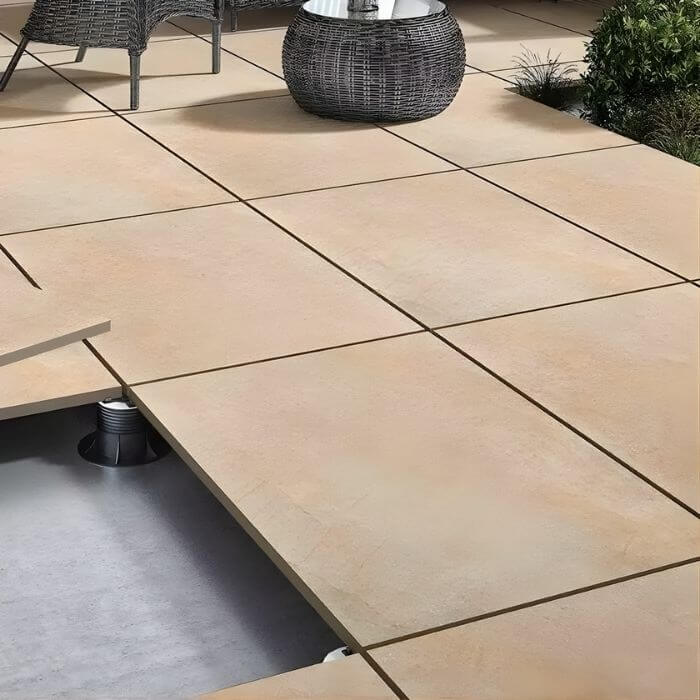
Older properties with imperfect walls. Victorian and Edwardian homes — which make up a significant portion of UK housing stock — rarely have perfectly plumb or flat walls. Large tiles demand a flat substrate. Any deviation of more than 3mm across the tile’s span becomes visible as lippage (where one tile edge sits higher than the next). Rectifying this adds plastering and prep time, often substantially increasing your overall project cost.
Very small floor areas. On a bathroom floor under 3–4m², very large tiles can look awkward — like oversized furniture in a small room. A 600×600mm tile on a 1.5m wide floor gives you fewer than three tiles across the width, with cuts at both edges. The proportions feel off, and the room can actually look smaller as a result because the scale relationship between tile and room is lost.
Weight and structural load. Large format porcelain is considerably heavier than smaller ceramic tiles. In properties with timber joists or older suspended floors, the subfloor may need reinforcement before large tiles can be safely laid — particularly on upper floors.
The Case for Smaller Tiles
Smaller bathroom tile sizes — 300×300mm, 200×200mm, brick-format 75×300mm, and the classic 150×150mm metro tile — get unfairly dismissed in the “go large” conversation. Used thoughtfully, they offer distinct advantages.
Pattern and movement add perceived depth. A herringbone layout in a 75×300mm tile on a bathroom floor creates a directional pull that draws the eye across the room. Used along the length of a narrow bathroom, this can make the space feel longer and wider — something a plain large tile laid straight simply cannot replicate.
Practical for curved or irregular surfaces. Smaller tiles are far more forgiving around bath panels, curved shower trays, and awkward alcoves. They require less cutting waste and fit naturally into spaces that large format tiles would struggle to navigate cleanly.
Better slip resistance options on floors. Many smaller floor tiles — particularly natural stone and textured porcelain in 200×200mm or 300×300mm formats — come with inherently higher slip resistance ratings, meeting the R10 or R11 standard (PTV 36+) recommended for wet areas in UK domestic bathrooms. Achieving the same rating in large format tiles narrows your product options considerably.
The Format Decision: A Practical Framework
Rather than choosing a tile size based on trend, match the format to your specific bathroom conditions.
For walls in compact bathrooms, a medium-to-large format (300×600mm to 600×1200mm) laid vertically with tone-matched grout is a reliable approach that reads as spacious without demanding a perfectly flat substrate.
For bathroom floors under 4m², a 300×300mm or 300×600mm tile gives better proportional balance than going larger, while still reducing grout lines compared to smaller mosaic formats.
For wet rooms and walk-in showers, prioritise slip resistance rating over size — and check that your chosen tile’s PEI rating is suitable for floor use before specifying.
For older UK properties, have your walls and floors assessed for flatness before ordering large format tiles. The cost of remedial prep work can easily outweigh the savings made elsewhere in the specification.
The Honest Answer
Large bathroom tile sizes reduce grout lines and can make a well-prepared space feel more open — but they are not a guaranteed fix for a small or awkward bathroom. Smaller tiles, laid in the right pattern and direction, can achieve comparable spatial effects and offer practical advantages that large format tiles cannot.
The tile size that makes your bathroom feel biggest is the one chosen to suit your room’s actual proportions, substrate condition, and how the space is used — not the one that’s currently trending.
Before ordering any tiles, measure your bathroom floor and walls carefully, account for cuts and wastage (typically 10–15%), and confirm your substrate is suitable for the format you’ve chosen.