

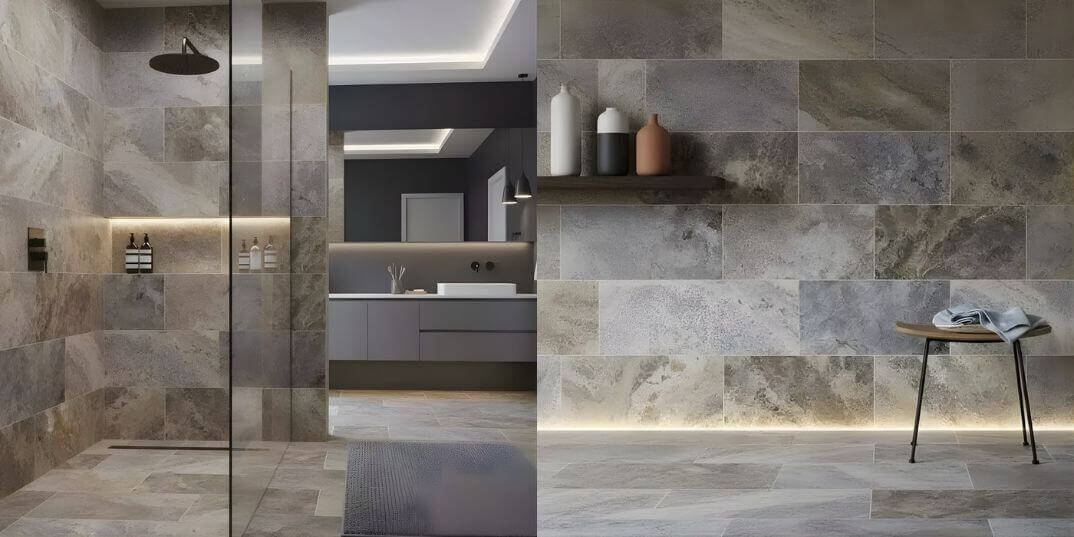
There is a reason that the most enduring bathroom interiors in UK homes — the ones that still look right thirty years after installation, the ones that appear in estate agent photographs without renovation — tend to share a common material quality: they reference the natural world rather than resist it. Stone that looks like it came from the ground. Clay that carries the memory of firing. Wood that shows its grain honestly. These are the materials that rustic bathroom tiles draw from, and they are materials that do not date because they were never fashionable in the first place.
Rustic bathroom design in 2026 is not a throwback. It is a deliberate positioning against the clinical, the over-polished, and the perfectly uniform — a choice that prioritises warmth, character, and material authenticity over the kind of precision that begins to feel cold after extended daily contact. Done well, it produces bathrooms that feel genuinely inhabited rather than recently installed, and that improve rather than diminish with the passage of time.
What Rustic Bathroom Tiles Actually Mean in 2026
Rustic tile design has accumulated some misleading associations over the years — terracotta floors in Tuscan kitchens, thick grout lines, surfaces that look deliberately aged to the point of pastiche. The best rustic bathroom tile specifications in 2026 share none of that visual excess.
Contemporary rustic bathroom tiles reference natural materials — stone, clay, unprocessed wood — through surface texture, tonal variation, and format proportion rather than through decorative motifs or artificially distressed finishes. The distinction matters because it determines whether the finished bathroom reads as a considered design choice or a themed installation. Considered rustic tile design produces rooms with organic warmth and material depth. Themed rustic produces rooms that look like a holiday let in the Cotswolds — enjoyable briefly and exhausting permanently.
The rustic tile categories doing the most interesting work in current UK bathroom design are stone-effect ceramics and porcelain, natural stone itself where the budget and property type support it, terracotta-influenced floor tiles, aged wood-effect porcelain, and handmade-look glazed ceramics in organic colourways. Each brings a different aspect of outdoor material language into the bathroom.
Natural Stone-Effect Tiles: Organic Without the Obligations
Genuine natural stone — limestone, sandstone, slate, travertine — produces bathrooms of extraordinary material quality. It also requires sealing before installation, periodic re-sealing throughout its life, careful management of acidic cleaning products, and an acceptance that the material will mark, chip, and absorb moisture in ways that require ongoing attention.
For most UK households, this maintenance relationship with natural stone is entirely workable and genuinely rewarding. For others — busy families, hard-water areas where limescale is a persistent reality, bathrooms that will be cleaned with whatever product is under the sink — high-quality stone-effect porcelain is a more practical route to the same aesthetic.
The stone-effect rustic bathroom tiles performing best in 2026 are those replicating riven slate, aged limestone, and rough-cut sandstone in warm tonal ranges — ochre-inflected beige, warm mid-grey, earthy taupe, dusty terracotta. These surfaces carry the micro-detail of natural stone — surface grain, tonal variation, the slight texture of a material that has been split rather than cut — with a level of manufacturing accuracy that has improved significantly over recent years.
In 300×600mm and 400×800mm formats, these tiles suit UK bathroom floor and wall applications with equal success. On floors, verify slip resistance (minimum PTV 36+ for wet domestic areas) before specifying — the textured surface of many rustic stone-effect tiles carries a naturally higher PTV rating than smoother tile surfaces, but always confirm with the product data sheet.
Terracotta-Effect Floor Tiles: Warmth Underfoot
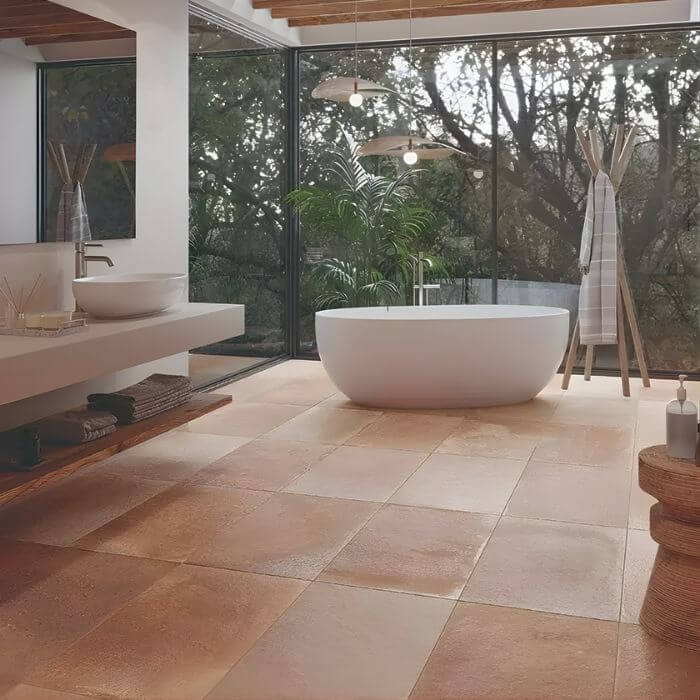
Terracotta has been a slow-building presence in UK bathroom design for several years, and in 2026 its position has solidified from trend-adjacent to genuinely mainstream. The warm, fired-clay tone of terracotta floor tiles introduces a quality that no other tile colour delivers: the specific warmth of a material that references earth, heat, and light simultaneously.
Authentic terracotta tiles — clay-bodied, unsealed, with the natural variation of hand-pressed or machine-pressed production — are a genuinely beautiful floor tile for bathrooms in the right property context. In period UK homes, farmhouses, and rural conversions, they are architecturally appropriate in a way that porcelain alternatives cannot quite replicate. They require sealing before use and periodic re-sealing, and they develop a natural patina with age that adds rather than subtracts from their appearance.
For homeowners who want the terracotta aesthetic without the maintenance commitment, porcelain terracotta-effect tiles in warm burnt orange, aged red-clay, and soft ochre tones are available across multiple UK suppliers in formats from 200×200mm traditional squares through to 300×300mm and 450×450mm sizes that suit larger bathroom floors. The best products in this category carry deliberate surface variation — colour shift between tiles, subtle edge imperfection — that replicates the natural inconsistency of fired clay convincingly.
Terracotta tones work particularly well with warm white grout rather than a tone-matched earth grout — the white joint separating warm clay-coloured tiles references traditional Mediterranean and North African tile traditions and reads as intentional rather than default.
Wood-Effect Porcelain: Warmth Without Vulnerability
Timber in a bathroom is a perennial design ambition and a persistent practical problem. Real wood flooring in a wet environment warps, stains, and deteriorates — even timber species marketed as moisture-resistant require careful installation and meticulous maintenance to perform reliably over years.
Wood-effect porcelain — the tile category that replicates the grain, knot detail, and tonal variation of natural timber in a water-resistant, durable format — is one of the most commercially mature product categories in the UK tile market. The best rustic bathroom tiles in this format replicate aged oak, reclaimed pine, and dark walnut with a level of surface detail — including the micro-roughness of real timber grain — that makes the distinction from genuine wood difficult at normal viewing distances.
The format is critical to a convincing result. Wood-effect tiles installed as 200×1200mm or 200×1000mm planks — replicating the proportions of actual floorboards — read as timber in a way that shorter formats in the same surface pattern do not. Staggered installation with varying offset between plank rows adds to the natural randomness of the finished surface.
Used on a bathroom floor, wood-effect porcelain in a warm oak or aged pine tone introduces the organic warmth of natural timber without any of the water vulnerability. Combined with natural stone-effect or terracotta wall tiles and matte or aged brass hardware, it anchors a rustic bathroom scheme with the floor material doing significant design work.
Handmade-Look and Aged Ceramic: Character in Every Tile
The tile category that most directly expresses the rustic bathroom aesthetic is handmade-look glazed ceramic — tiles produced to reference the surface qualities of artisanal or hand-pressed ceramics, with variable glaze application, slight edge imperfection, and colour variation between individual tiles in the same batch.
These are the tiles that carry the most visible evidence of material process. No two tiles are identical. The glaze pools differently in the lower edges of each tile. The surface reflects light at slightly varying angles across the wall. The overall effect is of a surface built from individual objects rather than applied as a uniform material — and this quality is precisely what distinguishes a rustic bathroom tile scheme from a standard specification with warm-toned tiles.
In the UK market, this category spans small square formats — 100×100mm, 130×130mm, 150×150mm — through to larger 200×200mm and 200×400mm sizes that maintain the handmade quality at a format that reduces installation time. The most appropriate colourways for rustic bathroom design are warm terracotta, aged sage, dusty warm white, honey amber, and earthy olive — colours that reference natural pigments rather than synthetic ones.
Installation requires slightly more care than uniform machine-made tiles. Because individual tiles vary in dimension, grout joints need to accommodate this variation rather than being held to the tight 1.5–2mm standard of rectified porcelain. A 3–5mm grout joint in a warm, mid-toned grout suits handmade-look ceramics far better than the narrow-joint approach appropriate to large-format precision tiles.
Stone, Clay, and Timber: Building the Rustic Palette
The most considered rustic bathroom tile schemes combine materials from two or three of the above categories rather than committing entirely to one. This layering of natural material references — stone-effect on the walls, terracotta or wood-effect on the floor, handmade-look ceramic as a feature in the shower niche or basin splashback — produces bathrooms with the kind of material richness that single-category schemes rarely achieve.
The principle governing these combinations is tonal coherence: warm tones throughout, organic surfaces throughout, avoiding any high-gloss or precision-finish element that introduces a clinical quality at odds with the overall material direction. A fully matte or lightly satin specification across all tile surfaces, with matte or aged metal hardware — bronze, aged brass, dark pewter — maintains the consistency that rustic bathroom tile schemes require to succeed.
Hardware and Accessories: Completing the Outdoor-Indoor Connection
The hardware choices that work within rustic bathroom tile schemes are those that share the material honesty of the tiles themselves. Aged brass or unlacquered brass taps develop a natural patina over time that deepens rather than undermines the aesthetic. Brushed bronze towel rails sit within the warm tonal range of terracotta and aged wood without competing with the tile surface. Dark iron or pewter accessories — hooks, shelving brackets, mirror frames — reference the material language of natural metals that have not been polished to a clinical finish.
Avoid polished chrome and high-gloss white sanitaryware in rustic bathroom tile schemes where the overall direction is warm and organic — the contrast is jarring in a way that pulls the room in two directions simultaneously. Matte white sanitaryware, stone-coloured or concrete-finish basins, and freestanding baths with a classic roll-top or boat-bath profile sit within the rustic bathroom material vocabulary without visual friction.
Natural accessories — a teak or oak bath mat, woven rattan storage, linen towels in warm neutral tones, a terracotta plant pot — complete the connection between the tile scheme and the broader outdoor material language the design is drawing from.
Rustic Bathroom Tiles in UK Property Context
Rustic bathroom tile schemes are most architecturally coherent in UK properties that share their material language: rural farmhouses, stone cottages, Victorian and Edwardian terraces with original period features, older semis where the architectural detail supports organic warmth rather than fighting it.
In contemporary new-builds with clean architectural lines and minimal period detail, rustic tiles can still succeed — but require more deliberate design to prevent the organic warmth of the materials from reading as stylistically discordant with the building. The connection to the natural world that rustic bathroom tiles establish is strong enough to work across a wide range of UK property types when the specification is handled with care.
Why Rustic Endures
The commercial durability of rustic bathroom tiles — their ability to look genuinely good a decade after installation rather than simply on renovation day — comes from the same source as all enduring design decisions: the materials reference something permanent rather than something contemporary.
Stone, clay, and timber have been the fundamental building materials of human shelter for millennia. The bathroom tiles that reference these materials in 2026 are not participating in a trend. They are making a material argument that will still be sound long after the trend cycle has moved on several times.
That is why rustic bathroom tiles bring the outdoors inside so effectively — and why they keep doing so, year after year, without requiring a renovation to maintain their relevance.
Always request physical tile samples in rustic stone-effect, terracotta, and wood-effect formats before ordering — the surface texture, tonal variation, and matte quality of rustic bathroom tiles reads very differently at scale compared to online product imagery.