

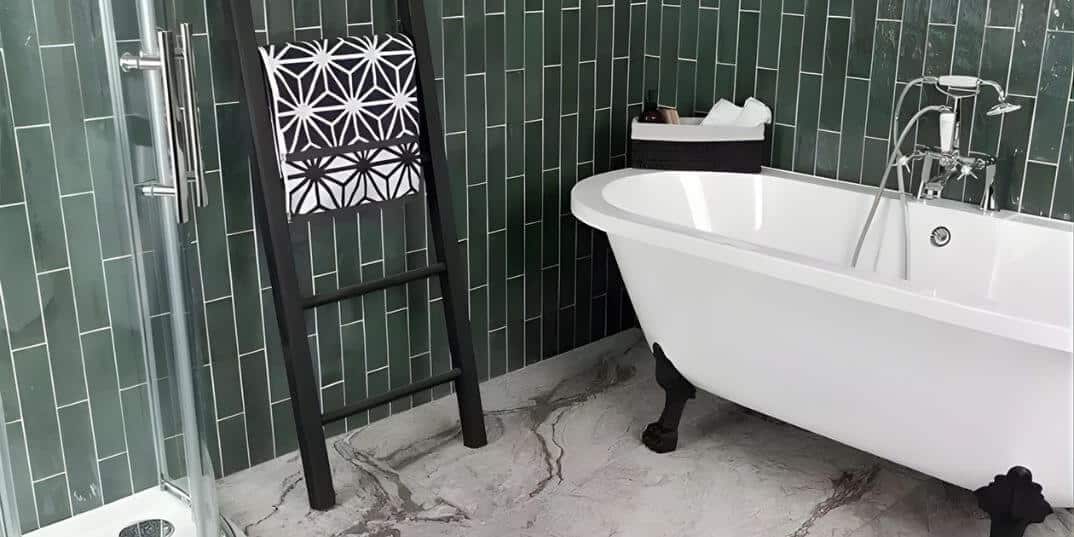
Green has earned its place as the most interesting colour in UK bathroom design right now and unlike some tile trends that arrive loudly and retreat within eighteen months, this one has demonstrated the kind of staying power that suggests it’s something more fundamental than a trend cycle. The reasons are partly aesthetic and partly psychological: green sits at the intersection of natural warmth and visual calm in a way that few other colours manage, and in a bathroom — a space where most people spend their first and last conscious moments of the day — that quality counts for something.
The green bathroom tile spectrum running from sage through olive to deep forest is not a single design decision. Each shade occupies different territory, suits different property types, and demands different specification choices. Understanding those distinctions is what separates a green bathroom that feels genuinely accomplished from one that simply followed the mood board.
Why Green Works Particularly Well in UK Bathrooms
Before examining individual shades, it’s worth understanding why green bathroom tiles have found such particular traction in the UK specifically.
British homes receive some of the most variable natural light in Europe. North-facing rooms, limited winter daylight, and the characteristic grey-blue quality of British outdoor light on overcast days create conditions that cool, stark interiors struggle against. Green — particularly the warm, muted greens that dominate the current UK tile market — corrects for this in a way that grey, white, and even beige cannot.
Warm green tiles with yellow or grey undertones read as calm and organic under artificial light. They don’t shift dramatically between morning daylight and evening downlighter glow the way that blue and purple-toned tiles can. In a bathroom used at multiple points throughout the day across variable light conditions, that consistency is a genuinely practical advantage — not merely an aesthetic one.
Green also responds exceptionally well to the natural materials increasingly present in UK bathroom interiors: oak and walnut timber vanity units, rattan storage, terracotta accessories, linen towels. The relationship between warm green tiles and natural materials feels organic in a way that is difficult to engineer with cooler, more urban tile palettes.
Sage Green: The Enduring Middle Ground
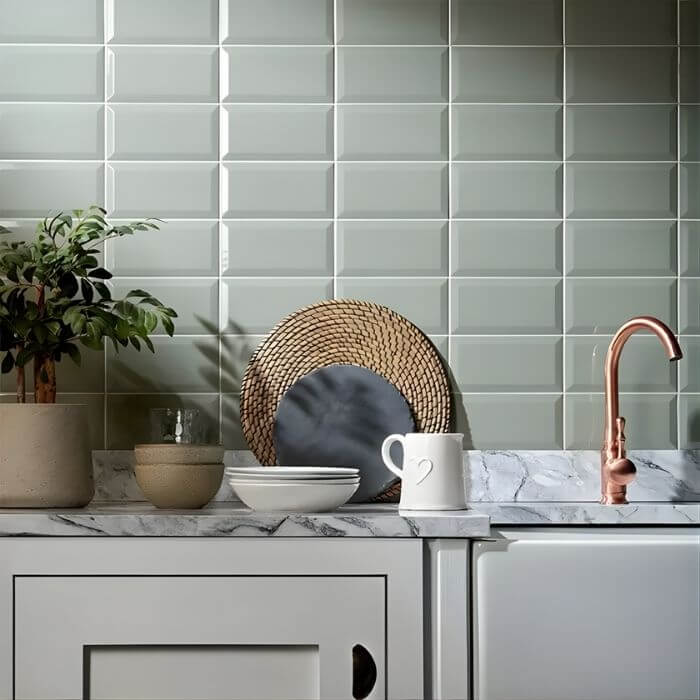
Sage green bathroom tiles are the most commercially active part of the green tile spectrum in 2026 — and have been building toward this position for several years. The colour sits precisely at the intersection of green, grey, and occasionally beige, which gives it unusual versatility. It works in contemporary new-builds, in Victorian terrace bathrooms with original period details, and in everything between.
The best sage green tiles in the current UK market are not flat. They carry slight tonal variation within the glaze or surface — a shift between cooler and warmer areas across individual tiles — that makes the installed surface feel alive rather than painted. This variation is most visible in glazed ceramic tiles, where the glaze pools naturally during firing, and in handmade-look formats where the manufacturing process itself introduces surface character.
In terms of format, sage green performs well across a wide range. A 300×600mm sage porcelain wall tile in a brick lay reads as contemporary and restrained. The same colour in a 75×150mm metro format adds a more domestic, characterful quality suited to older UK properties. Zellige-inspired sage tiles in 100×100mm squares introduce the kind of artisanal depth — glaze variation, light reflectivity, slight surface irregularity — that makes the colour genuinely compelling at close range.
Hardware pairing: Brushed brass is the most consistently successful hardware choice with sage green bathroom tiles. The warm gold tone responds to the yellow undertones embedded in most sage glazes and creates a combination that feels botanical and considered. Matte black works well with cooler, greyer sage tiles. Avoid polished chrome — it introduces a clinical quality that conflicts with the organic warmth sage is valued for.
Olive Green: Warmth With More Commitment
Olive green bathroom tiles sit deeper and warmer than sage — more yellow-green than grey-green — and require a clearer design intention than the more forgiving sage palette.
Used well, olive green tiles produce bathrooms of genuine character. The depth of tone creates a sense of enclosure that feels deliberate rather than claustrophobic — particularly effective in smaller rooms like cloakrooms, ground-floor WCs, and en suites where an immersive colour scheme is proportionally appropriate.
Where olive tiles become problematic is in bathrooms that receive limited natural light and have warm-toned artificial lighting. The yellow component of olive green can intensify under warm light, occasionally shifting toward a shade that reads as murkier than intended. In these conditions, a cooler-toned artificial light source — a colour temperature around 4,000K rather than the 2,700K of standard warm white LEDs — keeps the olive tile reading cleanly.
Olive green works particularly well in glazed ceramic formats where the glaze depth adds richness to the colour. A flat, digitally printed olive porcelain in a large format can occasionally look washed out — the colour benefits from the variation and depth that glazed surfaces provide. Smaller bathroom tile sizes — 130×130mm square, 65×265mm elongated brick, 150×150mm classic square — allow the glaze colour to build across multiple tiles rather than reading as a single unvaried surface.
Paired with raw plaster walls, exposed concrete accessories, or dark timber vanity units, olive green tiles produce interiors that feel genuinely grown-up — rooms with a material seriousness that lighter, safer colour choices cannot approach.
Forest Green: Full Commitment, Maximum Reward
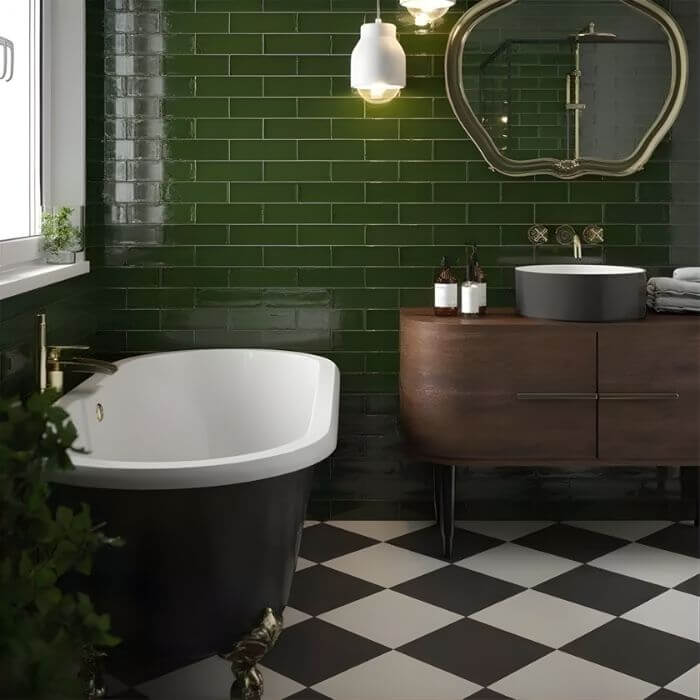
Deep forest green bathroom tiles sit at the most demanding end of the green spectrum — and at the most rewarding, when the specification is handled with care. This is not a colour for hesitant application. Forest green used across a shower enclosure, a feature wall, or an entire small bathroom rewards commitment and punishes half-measures.
The depth of colour in forest green tiles — which sits close to bottle green, dark emerald, and deep hunter green depending on the specific product — creates a visual weight that changes the fundamental character of a room. In a bathroom with good artificial lighting, forest green tiles produce an atmosphere that is genuinely luxurious: rich, enveloping, and completely removed from the cautious neutrality that dominates most UK bathroom specifications.
Glazed ceramic in forest green — particularly in zellige-inspired formats with genuine surface variation — produces some of the most visually arresting bathroom tile surfaces currently available in the UK market. The glaze shifts between green, teal, and near-black depending on lighting angle, making a wall of forest green zellige tiles a constantly changing surface. This dynamism is specifically what makes deep green tiles worth the additional boldness of the initial commitment.
Practically, forest green tiles require the same maintenance awareness as other dark, saturated bathroom tiles. In hard-water areas — which covers a significant portion of England — limescale deposits are more visible on dark tiles than on pale ones. A satin or semi-polished finish manages this more practically than high gloss, offering enough reflectivity to carry the depth of colour without amplifying every water mark.
Mixing Green Tones: Creating a Layered Scheme
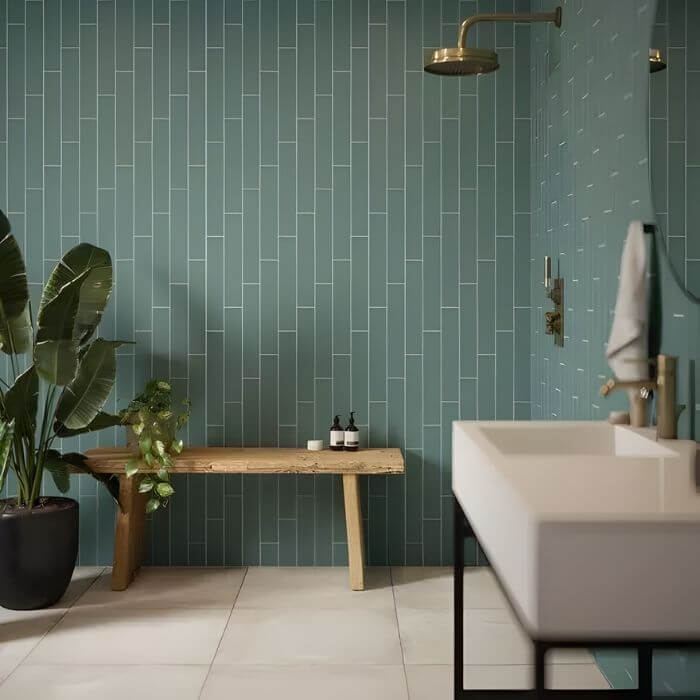
The approach gaining most traction in UK bathroom design in 2026 is a two-tone green scheme — using a deeper green shade on the floor and a lighter shade on the walls — to create a layered, botanically-influenced palette that feels considered without relying on contrasting colours.
A forest green floor tile in a 300×600mm format (with verified R10 slip resistance for wet areas) paired with sage green wall tiles in a 300×600mm or 200×400mm brick format produces a scheme where the floor anchors the room and the walls open it upward. The relationship between the two greens reads as organic rather than matched — a quality that distinguishes a designed bathroom from one where the tiles were simply selected from the same range.
The grout specification matters more in green tile schemes than in most neutral applications. A warm mid-grey grout works across both sage and forest green tiles, maintaining cohesion between the two surfaces. A white grout with dark forest green tiles creates a graphic, high-contrast grid that emphasises the tile layout — more architectural, less organic. Tone-match the grout to the lighter of your two green tiles for the most cohesive result.
Specification Considerations Across the Green Palette
Green bathroom tiles — regardless of shade — follow the same technical specification requirements as any bathroom tile, but a few practical points are specific to this colour category.
The yellow pigment component in most warm green glazes can be sensitive to bleach-based cleaning products over time, potentially affecting glaze colour with repeated aggressive cleaning. Specify pH-neutral tile cleaners from the outset, particularly for glazed ceramic tiles in the olive and forest green range.
On floors, verify that your chosen green tile meets a minimum PTV (Pendulum Test Value) of 36 in wet conditions — the R10 standard for domestic UK bathroom wet areas. Many decorative glazed tiles in the green palette are specified for wall use only and carry insufficient slip resistance for floor applications. Check the product data sheet rather than assuming.
For green tiles in smaller bathroom tile sizes — particularly mosaic and zellige formats — allow an increased adhesive coverage of 95–100% (full bed application) to prevent hollow spots beneath individual tiles. Smaller tiles are more susceptible to hollow bonding than large format tiles, and the movement of a heated or wet bathroom floor amplifies the consequences over time.
The Green Bathroom Tile in 2026 and Beyond
Green bathroom tiles have reached the point in their design trajectory where they are no longer a statement of trend awareness — they are a statement of considered taste. Sage, olive, and forest green each occupy distinct design territory, and each offers something that the dominant grey and white palette of the previous decade could not: a room that feels genuinely warm, organically connected to natural materials, and specific enough to suggest that real decisions were made.
Choose the shade that suits your light conditions. Specify the format that suits your substrate and room proportions. And commit to the colour with the confidence the material deserves.
Request tile samples in at least two or three green shades — including one lighter and one deeper than your initial preference — and assess them on your actual bathroom wall over 48 hours before ordering. The undertone difference between sage, olive, and duck egg is subtle on a sample card and significant on a finished wall.