

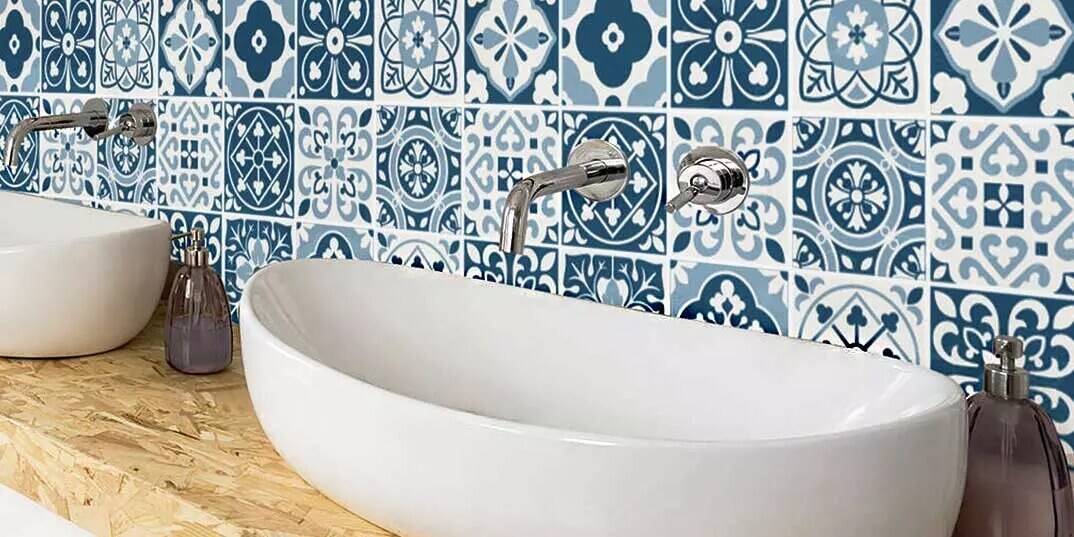
Tile trends are a slow burn. Unlike paint colours or accessory choices, bathroom tiles are a ten-to-fifteen year decision for most UK homeowners — which means the best bathroom tiles aren’t simply the ones generating the most Instagram saves right now. They’re the ones that will still feel considered, appropriate, and well-made a decade from now when the rest of the room has quietly evolved around them.
What’s happening in 2026 reflects that longer view. The dominant mood is material honesty — tiles that reference natural surfaces convincingly, finishes that age gracefully, and colour choices that work harder under the specific light conditions of British homes than the trend photography might suggest.
Here’s what’s genuinely worth your attention this year.
Warm Stone-Effect Porcelain: The Dominant Force
If one tile category defines the best bathroom tiles of 2026, it’s warm stone-effect porcelain. Not the flat, uniform grey stone-effect of five years ago — that era has passed — but a richer, more complex generation of tiles replicating travertine, limestone, sandstone, and aged marble in tones that sit firmly in the warm neutral spectrum.
What’s driving this is a combination of manufacturing quality and cultural shift. Digital inkjet printing technology has reached a point where the surface variation, veining, and tonal movement of natural stone is replicated with convincing accuracy. The result is a tile that reads as natural at normal viewing distance — without the sealing requirements, acid sensitivity, or price premium of genuine stone.
In terms of colourway, the strongest performers in 2026 are warm ivory travertine effects, soft sandy limestone tones, and aged Roman-style marble in cream and warm white. These shades correct for the cool, flat light quality common in north and east-facing UK bathrooms in a way that the cool grey stone effects of the previous decade never quite managed.
Format-wise, this category runs comfortably from 400×800mm through to 600×1200mm — large enough to show the stone pattern across a meaningful surface area, with grout lines placed far enough apart to maintain the natural stone illusion.
Fluted and Ribbed Tiles: Texture With Structure
The best bathroom tiles of 2026 are increasingly three-dimensional. Fluted wall tiles — vertically channelled porcelain and ceramic with a consistent ribbed relief — have moved from accent detail to full-wall application in a significant shift from their origins as a niche design choice.
What fluted tiles offer that flat tiles cannot is the play of light across a surface. In a bathroom with overhead or directional lighting, the vertical channels of a fluted tile create a shifting pattern of light and shadow that makes the wall feel alive rather than static. This visual movement is particularly valuable in windowless bathrooms — of which there are many in UK housing — where flat tile surfaces can feel deadened under artificial light.
The most commercially relevant fluted tiles in 2026 are running in warm white, ivory, and soft sage colourways, in formats between 75×300mm and 200×600mm. Full-height application on a single wall — particularly behind a freestanding bath or as a shower back wall — is the installation approach producing the strongest results.
Handmade-Look Ceramics: The Artisan Counter-Movement
Alongside the technical precision of large-format porcelain, there’s a clear and growing appetite for the opposite: tiles that carry the visible evidence of human making. Slight surface wobble, variable glaze thickness, gently uneven edges — characteristics that would have been considered defects in mass-market tile production are now central to the appeal of artisan-influenced ceramics.
The best bathroom tiles in this category for 2026 include pressed clay wall tiles with a thick, flowing glaze — available in warm terracotta, sage, dusty rose, and warm ivory — and elongated brick formats in the 65×265mm and 75×300mm range that reference traditional British handmade brick tile proportions.
These tiles suit UK period properties exceptionally well. In a Victorian terrace bathroom, a Georgian townhouse en suite, or an Edwardian semi, the slightly irregular surface and rich glaze depth of a handmade-look ceramic tile feels architecturally appropriate in a way that polished large-format porcelain sometimes does not.
Used as a full wall tile rather than just an accent, they create rooms with genuine warmth and character — the quality that distinguishes a bathroom that’s been designed from one that’s simply been tiled.
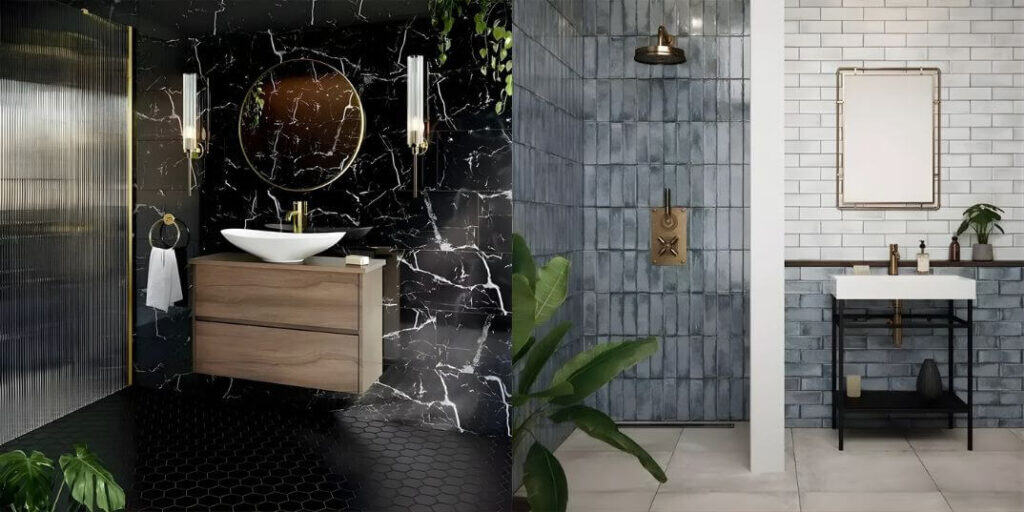
Colour in 2026: Where the Market Is Actually Moving
Cool grey has retreated. The best bathroom tiles this year sit in a warmer palette — but with more nuance than a simple swing to beige.
Warm sage and soft olive are performing strongly, particularly in glazed ceramic formats where the colour can carry depth and variation rather than appearing flat. Against warm timber accessories and brushed brass hardware — a combination that continues to gain traction in UK bathroom design — sage tiles create an organic, considered quality that photographs well and lives well.
Terracotta and warm clay have moved from trend to established category. Available in everything from traditional 150×150mm encaustic-effect floor tiles to large-format porcelain wall tiles, terracotta-adjacent tones bring warmth that’s particularly valuable in UK bathrooms during the colder months when the desire for a space that feels genuinely warm — not just heated — is most acutely felt.
Aged and antique white — warm white with visible patina effects, slight yellowing, or surface irregularity — is appearing in bathrooms where the objective is timelessness rather than trend participation. These tiles work equally well in contemporary and traditional contexts, which makes them a sensible investment for homeowners thinking about resale alongside personal taste.
The Grout Conversation: Still Underestimated
The best bathroom tile specification in 2026 is incomplete without a deliberate grout decision. Tone-matched grout — particularly in warmer colourways — continues to be the approach that makes individual tiles read as a continuous surface rather than a grid.
Where contrasting grout is used intentionally, the best results come from staying within the same tonal family — a slightly darker warm brown grout with a sand-toned tile, for example — rather than the stark white grout and dark tile combination that has become visually fatigued through overuse in the past several years.
Epoxy grout, once considered a specialist product, is now widely available at consumer price points and offers stain resistance and durability that cement-based grout cannot match — particularly relevant in hard-water areas across central and southern England where limescale is a daily reality.
What Makes a Tile Worth Investing In
The best bathroom tiles of 2026 share a consistent set of qualities beyond aesthetic appeal: appropriate water absorption ratings for their intended surface (below 0.5% for porcelain floor tiles, below 3% for ceramic wall tiles in wet areas), verified slip resistance for any floor application (minimum PTV 36+ for domestic wet rooms), and a surface finish that remains manageable under the cleaning routines of a real household.
Trend matters less than specification. The tile that looks extraordinary in a design magazine but shows every limescale mark, chips within eighteen months, or requires specialist cleaning products will cost more over its lifespan than a well-specified tile in a considered but quieter design.
Buy the best bathroom tiles your budget genuinely allows. Specify them correctly for their surface and application. And choose a colour and texture you’ll still find worth walking into every morning in 2031.
Request physical samples of any tile you’re seriously considering — digital photography, even from quality suppliers, cannot accurately convey surface texture, glaze depth, or true colour under your bathroom’s specific lighting conditions.